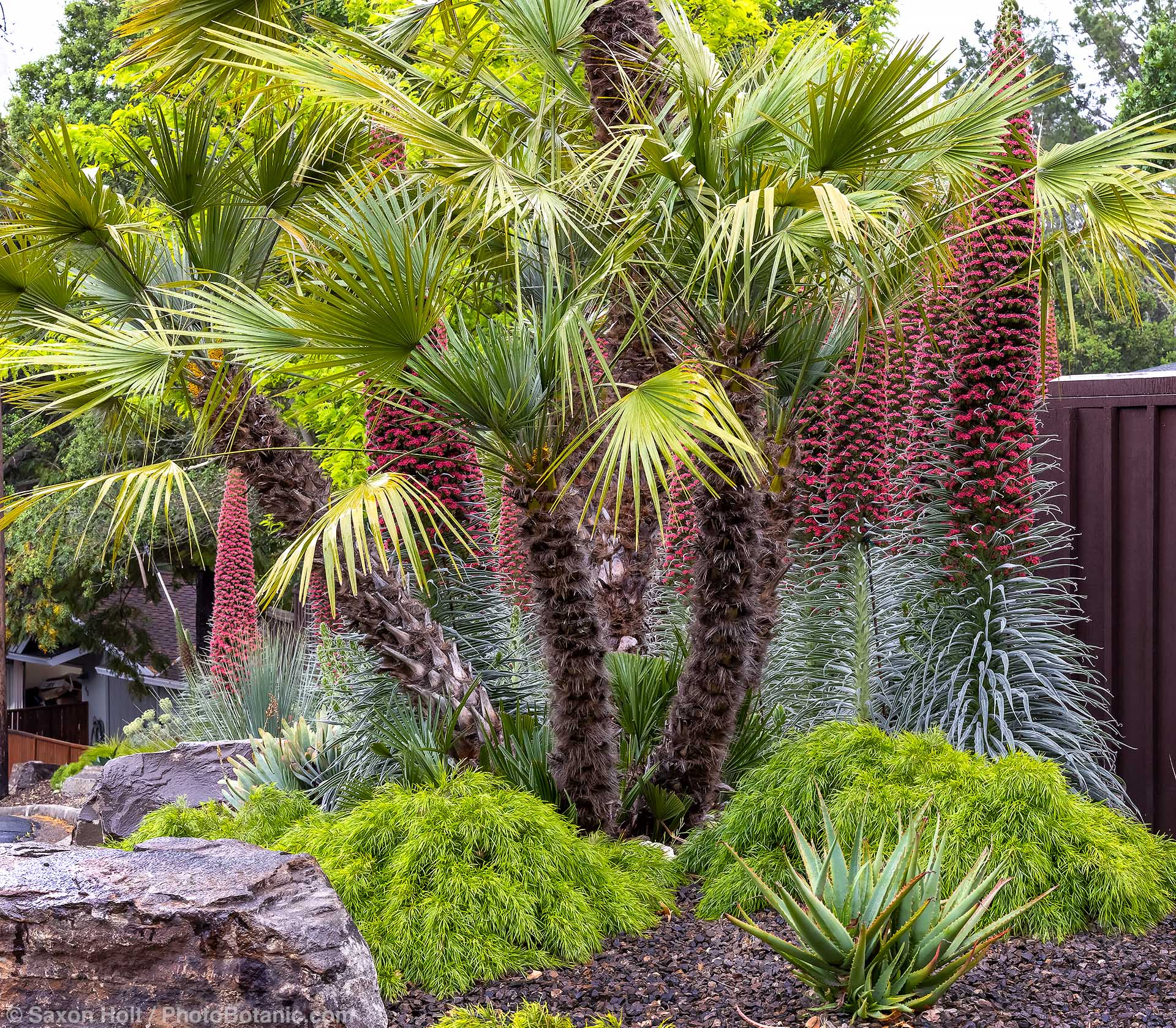
Still inspired by your feedback, we are dedicating the next few newsletters to an exploration of plants native to the Mediterranean. This month’s blog profile is the Mediterranean fan palm and the design feature shows other palm trees in garden settings.
We are excited to be gardeners, always learning (or being forced by our gardens to learn) better ways to bring the beauty of plants into our lives. We don’t need recent studies to tell us what we know instinctively—gardens are good for us. And they are good for building communities.
We don’t need to hear that plants are the stars of green infrastructure or that science is showing us that gardens can mitigate climate change. We know it.
Your comments from the survey convinced us that we are all gardeners here and don’t need any more reasons to garden. We already do.
What you do want is advice on new plants, climate-adapted plants, and interesting ways to bring them into gardens—gardens that benefit the planet as much as they do us.
We are trying to do that, one newsletter at a time. Thanks for reading.
~ Saxon Holt and Nora Harlow
July’s Blog Post:
Mediterranean Fan Palm
In the dry, rocky, low-nutrient soils of exposed coastal cliffs and mountain slopes the Mediterranean fan palm (Chamaerops humilis) forms low, shrubby, five- or six-foot mounds that, from a distance, are barely distinguishable from the rest of the sun-baked garrigue community. In more fertile, protected island valleys, and in the relative luxury of garden cultivation, its prominent 15- to 20-foot presence is hard to miss.
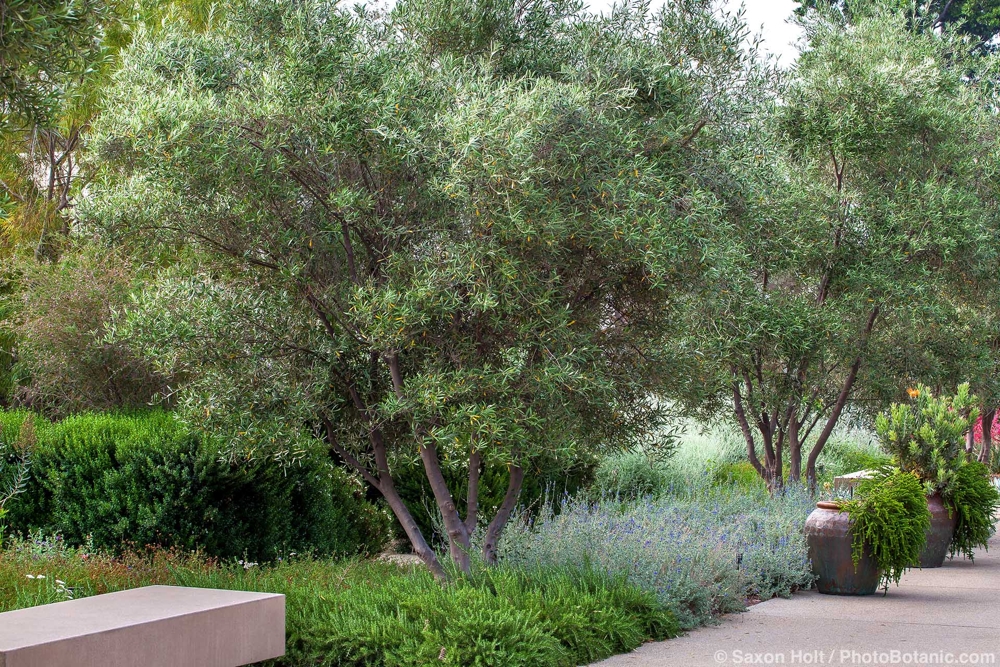
Lavandula angustifolia, English lavender, flowering perennial herb, Villa Catalana Cellars, Oregon. Note the purple Eucomis, well adapted to the summer-dry climates of the Pacific Northwest.
The Mediterranean fan palm that we feature in this month’s blog is certainly a classic and finds its way into many summer-dry climate gardens, but there are other drought-tolerant palms that can add strong architectural form, foliage drama, and lushness to gardens.
The California fan palm (Washingtonia filifera) is the only palm native to the American West. Over time, it can get up to 60 feet tall and have a massive trunk, but if you allow it space, it can be really impressive even as a young tree. Here they are planted in a California native plant garden for an industrial factory site as an outdoor oasis by Terramoto Design.
Washingtonia filifera, California fan palm
Guadalupe palm (Brahea edulis) is a much slower growing, more compact fan palm that also does well in coastal conditions. It will eventually get up to 25 feet tall but with its slender trunk, it can work beautifully in relatively small gardens.
Here, it is planted in a stately row along the appropriately named Palm Drive entry to the Huntington Library.
Brahea edulis, Guadalupe palm
The Chilean wine palm (Jubaea chilensis) will eventually get massive but grows slowly if not overwatered and may take 20 years to outgrow a well-placed spot in the garden such as this one in a backyard gravel patio in Portland, Oregon, designed by Sean Hogan.
Jubaea chilensis, Chilean wine palm
Want to learn more?
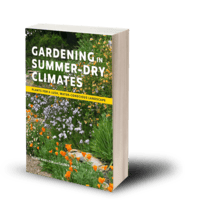
By choosing naturally occurring, climate-appropriate plants, gardeners can promote healthier ecosystems and make a difference from their own backyards. Gardening in Summer-Dry Climates guides you through the journey of cultivating a stunning, biodiverse landscape with gorgeous pictures, detailed advice, and an expansive plant compendium. Plus, when you order it directly from us, we will autograph it for you.
We may not need to hear that plant science is showing that gardens can mitigate climate change, but it’s nice to have a scientific citation when needed. Here, from the peer-reviewed journal ScienceDirect: “The domestic garden – Its contribution to urban green infrastructure”.
We would love to hear about any resources you would like to pass along. We all get these snippets from our news feeds and inboxes. Let’s share the best, and we will keep the running list so you can find them later on the Links We Like page.
Saxon Holt is a photojournalist and sole photographer of more than 30 garden books, including the award winning books Plants and Landscapes for Summer-Dry Climates, The American Meadow Garden, and Hardy Succulents. He is the Director of the Summer-Dry Project, a Fellow of the Garden Writers Association, and owner of the PhotoBotanic Garden Library.