Summer is winding down, and most of our gardens are probably looking tired, retreating into summer dormancy. We have learned not to expect too much from our summer-dry gardens this time of year, as they enter dormancy, when the bones of any garden reveal their importance.
Those bones hold together the structure and show the overall design. It starts with the hardscape design, the boundaries and pathways, the rock work and patios, but evergreen shrubs are critical to the bones, too.
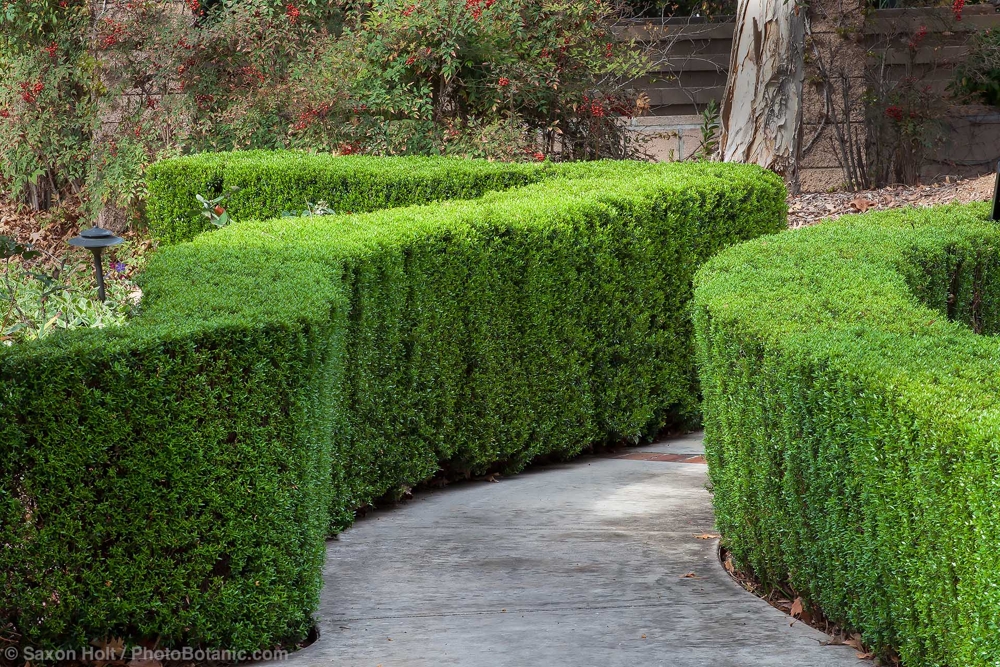
Our design feature this month shows examples of evergreen shrubs that have been pruned somewhat formally, a way to accent the bones of their gardens.
Be sure to give your shrubs a nice, deep drink to get them through to the rainy season, and refrain from any pruning now, which would stimulate new growth too soon.
~ Saxon Holt and Nora Harlow
August’s Blog Post:
Myrtus communis
No wonder it’s called common myrtle. Widely cultivated since ancient times, its natural distribution is uncertain, but Myrtus communis is believed to be native throughout the entire Mediterranean basin as well as east from the Levant through western Asia to the foothills of the Himalayas in northwestern Pakistan.
“Seattle is a summer-dry climate, and this year residents are even experiencing almost desert-like temperatures, so let’s go there – here, the marvelous Miller Botanic Garden – showing silvers on the west facing Dry Bank: Veronica topiaria (topiarist’s hebe, for its naturally neat appearance), Festuca glauca, and Yucca recurva.”
Our feature on the Mediterranean myrtle made us think of other evergreen shrubs that can be pruned hard. This manicured look with shaped hedges gives some formality to a garden and often requires multiple prunings throughout the growing season (not late summer), and all these examples were touched up before the photographer showed up.
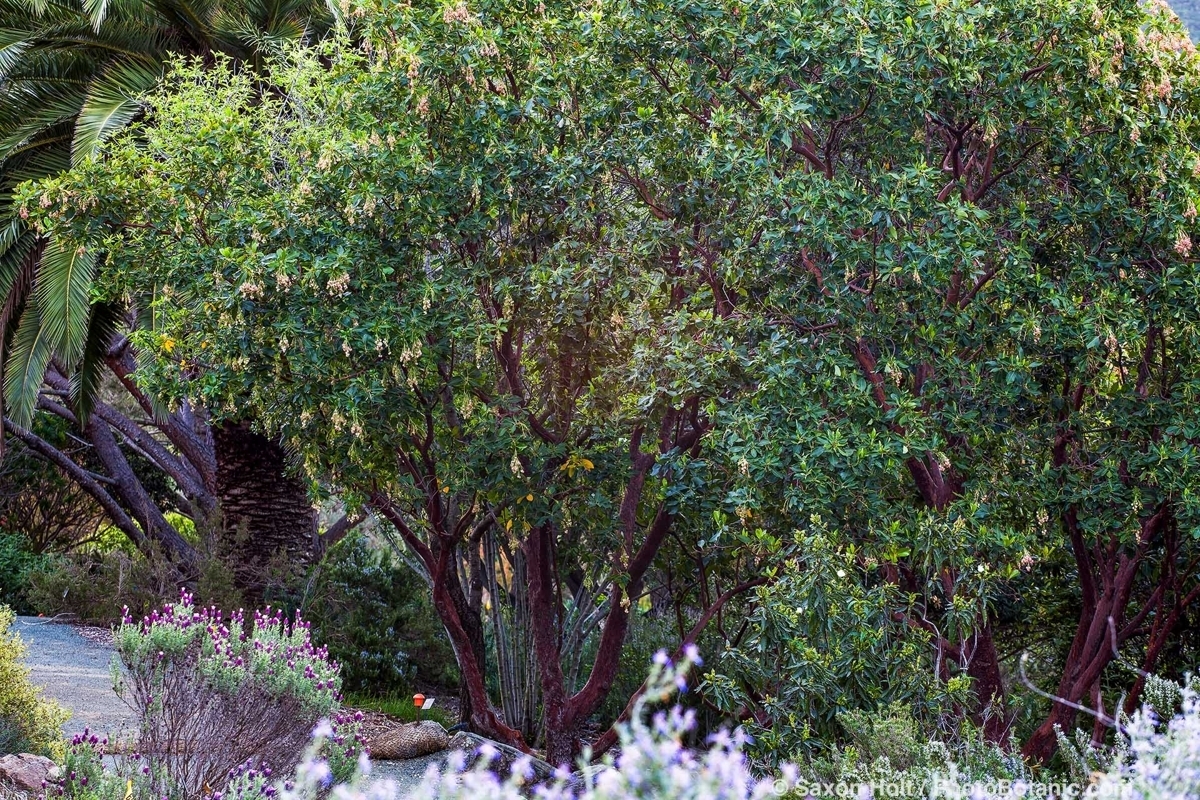
Even California native shrubs can be pruned hard to create formal looks (not that they all look happy when overdone). We have seen Catalina cherry, coyote brush, Pacific wax myrtle, jojoba, manzanita, and here, coffeeberry.
Frangula californica, coffeeberry, evergreen hedge – Joel Lym, California native plant front yard garden.
Many people are surprised to see boxwood in summer-dry gardens, but they are native to the Mediterranean and are really tough shrubs. In more temperate climates with lots of summer rain, they grow fast and need a lot of touch-ups to keep that formal look, but in our climate, twice a year keeps them looking formal. This ornamental horticulture demonstration garden at Cal Poly, San Luis Obispo, was photographed after hedging in late April and also features hard pruning on junipers.
Pruned boxwood hedges, Buxus sempervirens; Leaning Pine Arboretum
We are beginning to see more evergreen shrubs from other summer-dry climates being used as formal hedging. The Mediterranean has a long ornamental gardening history, and gardeners have spent centuries learning how to use their native shrubs. Many are tried and true and have given Mediterranean gardening its name, but in recent years, it has been really exciting to see plants from other summer-dry climates enter the nursery trade.
Indeed, this is why we call our work The Summer-Dry Project, so as not to inadvertently suggest plants from only a Mediterranean plant palette. Plants like podocarpus from South Africa, escallonia from Chilé, and westringia from Australia (below) are still somewhat new to horticulture, and we are excited to see how gardeners will use the many new selections that are entering the nursery trade.
Well-pruned drought-tolerant westringia hedge in California garden
Want to learn more?
By choosing naturally occurring, climate-appropriate plants, gardeners can promote healthier ecosystems and make a difference from their own backyards. Gardening in Summer-Dry Climates guides you through the journey of cultivating a stunning, biodiverse landscape with gorgeous pictures, detailed advice, and an expansive plant compendium. Plus, when you order it directly from us, we will autograph it for you.
We often hear how mycorrhiza fungi are important to soil health, drought resistance, and healthy ecosystems. SPUN Society for the Protection of Underground Networks is where leading scientists are publishing papers and articles that are easily understood by us laypeople.
We would love to hear about any resources you would like to pass along. We all get these snippets from our news feeds and inboxes. Let’s share the best, and we will keep the running list so you can find them later on the Links We Like page.
Saxon Holt is a photojournalist and sole photographer of more than 30 garden books, including the award winning books Plants and Landscapes for Summer-Dry Climates, The American Meadow Garden, and Hardy Succulents. He is the Director of the Summer-Dry Project, a Fellow of the Garden Writers Association, and owner of the PhotoBotanic Garden Library.