It’s September, summer is officially over, and fire season has officially begun. We hope by the time you read this there are no fires troubling you, your friends, or your colleagues. But we can be pretty sure fires are troubling a lot of people all over the world.
California has finally passed its groundbreaking fire-safe landscaping code, known as the Zone 0 defensible space regulations, a first-of-its-kind policy in the nation. We have been tracking this legislation for six years since it was introduced in the California Assembly.
If you don’t subscribe to our blog feed, there’s a link to the Zone 0 blog below with photos of some fire-safe landscapes. We urge you to think about fire safety, especially now during fire season. Every little thing we do makes everyone a little bit safer.
~ Saxon Holt and Nora Harlow
September’s Blog Post:
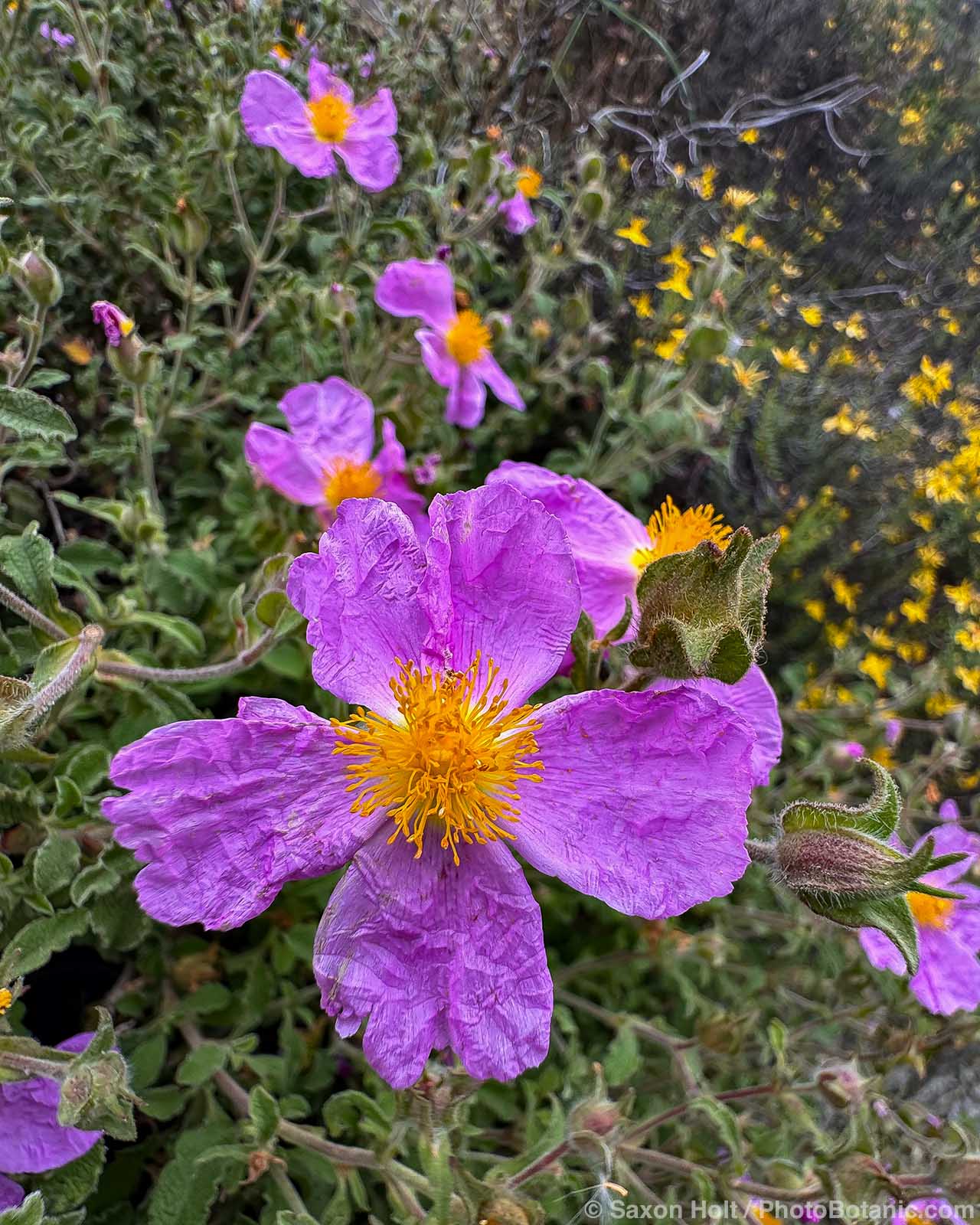
Rockrose
Rockroses (Cistus species) are so glorious in bloom and their leaves are so delightfully aromatic on hot summer days that one might expect them to be featured in every garden in summer-dry climates. That they are not is a bit of a mystery, but one that perhaps can be explained.
“Almost nothing says summer-dry climate quite like bulbs and geophytes that store all the winter-wet moisture to get through summer. Many are adapted to flower in spring, but there is a whole class of bulbs, like Amaryllis, that are summer-blooming. Here in very late summer, we see Rhodophiala bifida (Hippeastrum bifidum) oxblood lily, in the Ruth Bancroft garden”
The recently approved wildfire Zone Zero landscaping regulations in California were six years in the making. See our new blog, California Fire Codes Approved, with some history of these regulations, including our own articles over the years.
Zone Zero refers to the closest landscaping area to a house, technically zero to five feet. From the initial proposal, it was contentious, with much debate over how flammable healthy landscape plants actually are. Final regulations have been modified because of the input from gardeners.
Despite the controversy, there are some very good landscaping suggestions within the regulations. We urge you to read the article to find more details and resources.
We have had the opportunity to photograph a number of firewise gardens over the years – this is not a new issue. Gardeners in summer-dry climates must anticipate fire and design gardens to be resilient for their own safety as well as for the sake of the community at large.
In preparing our book, we identified and photographed some excellent examples. This photo shows the patio hardscape between the house and the landscaping, a well-pruned tree away from the house, and low-flammability plant material, including the succulents across from the patio.
This next one is a home that was rebuilt after it was destroyed in the Tubbs fire in 2017. It shows a very wide gravel patio between the house and the vegetation. We love the little strips of soil for vegetable gardening. The design is by April Owens:
And this is a brand new installation by Michelle Derviss. It clearly shows Zone 0 planting that will age very well.
By choosing naturally occurring, climate-appropriate plants, gardeners can promote healthier ecosystems and make a difference from their own backyards. Gardening in Summer-Dry Climates guides you through the journey of cultivating a stunning, biodiverse landscape with gorgeous pictures, detailed advice, and an expansive plant compendium. Plus, when you order it directly from us, we will autograph it for you.
There are numerous links for firewise landscaping in our blog post and on our Resources page; but we came across this wonderful free flipbook Fire Smart Yards that visualizes all the principles in one place (from Fire Safe Marin.)
We would love to hear about any resources you would like to pass along. We all get these snippets from our news feeds and inboxes. Let’s share the best, and we will keep the running list so you can find them later on the Links We Like page.
Saxon Holt is a photojournalist and sole photographer of more than 30 garden books, including the award winning books Plants and Landscapes for Summer-Dry Climates, The American Meadow Garden, and Hardy Succulents. He is the Director of the Summer-Dry Project, a Fellow of the Garden Writers Association, and owner of the PhotoBotanic Garden Library.