California Fire Codes Approved

Share This!
Fire safety and landscaping codes are back in the news; but California gardeners, don’t get caught up in the headlines and clickbait. Read the code, it’s reasonable.

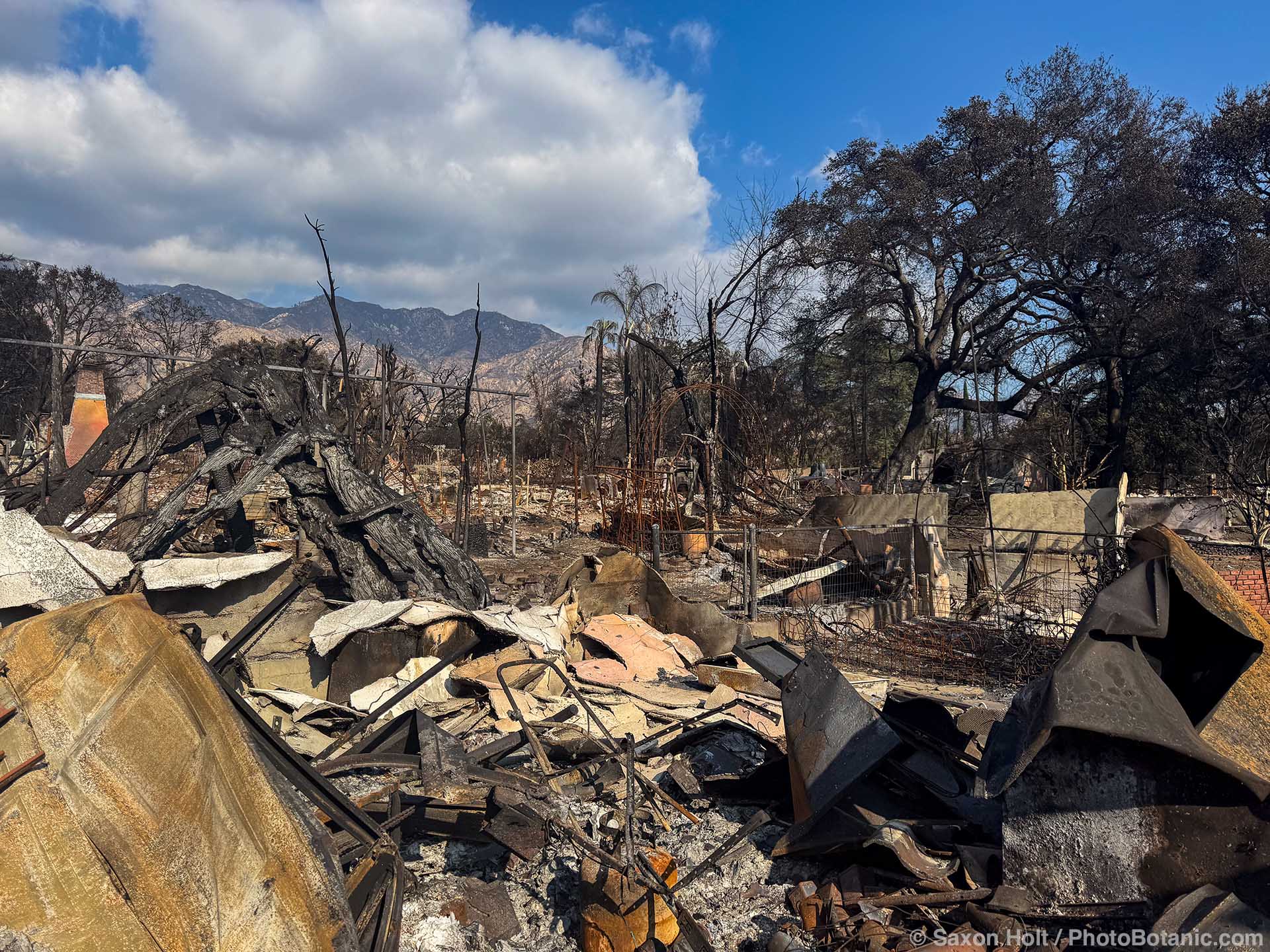
Altadena fire January 2025 aftermath showing Deodar Cedar trees at Christmas Tree Lane
It has been more than a year since the tragic and devastating Eaton and Palisades fires destroyed whole neighborhoods in Southern California. In that time the California Board of Forestry and Fire Protection has engaged with California communities—from backyard gardeners to fire experts with dozens of workshops and garden tours—to fine tune the Zone 0 ember-resistant zone landscaping regulations that were first proposed in 2020 with AB3074. Read our Planning for Fire, for discussion on urban planning for fire resilient, green infrastructure.
“We’ve heard valuable input from all corners of the state and have worked hard to draft policy that threads the needle across a very complex set of mandates, risks, and values,” said Tony Andersen, Executive Officer for the Board. Full news release Board of Forestry and Fire Protection Aug 19, 2026.
Gardeners who worried that urban vegetation would be considered as “fuel” and considered a significant factor for spreading these apocalyptic fires became seriously engaged in the existing debate about the details of the proposed code, and the Board listened.
The debate was not new. Assembly Bill (AB) 3074 was first introduced in 2020 after years of devastating forest fires in Northern California that increasingly encroached on urban areas such as the Tubbs Fire that raced into Santa Rosa’s Coffey Park in 2017 and the massive Camp Fire that destroyed Paradise in 2018. California Board of Forestry and Fire Protection was asked to come up with recommendations which have been debated and refined over the last six years. Our own article about Fire Zone Landscape Codes traces some of the history and frustrations gardeners have with the idea that their gardens were going to be sacrificed in the name of public safety.
Gardeners need not panic and the final details of the regulations are sensible practices we should support for the general safety of all communities. First, the rules only apply to the most hazardous zones at the very edge of the wildland urban interface (WUI). Local fire departments can certainly create their own regulations but the policy applies to homes only in the State Responsibility Area (SRA) and Very High Fire Hazard Severity Zones and Local Responsibility Areas (LRA) which are determined by local fire departments.
The maps in the link above indicate that only those homes in very high hazard areas most immediately next to the WUI will be affected, while the majority of homes in most cities are not required to enact the zone zero requirements. But again, all fire departments may adapt their own versions of these codes based on how they define their own LRA.
The Zone 0 regulations, the area within 5 feet of a home, have always been the restrictions that were most concerning to gardeners. Fire safe landscaping has been defined as a series of zones based on defensible space and how firefighters might be expected to fight fires and protect homes. More information and details on the definitions of defensible space of zones 0, 1, and 2.

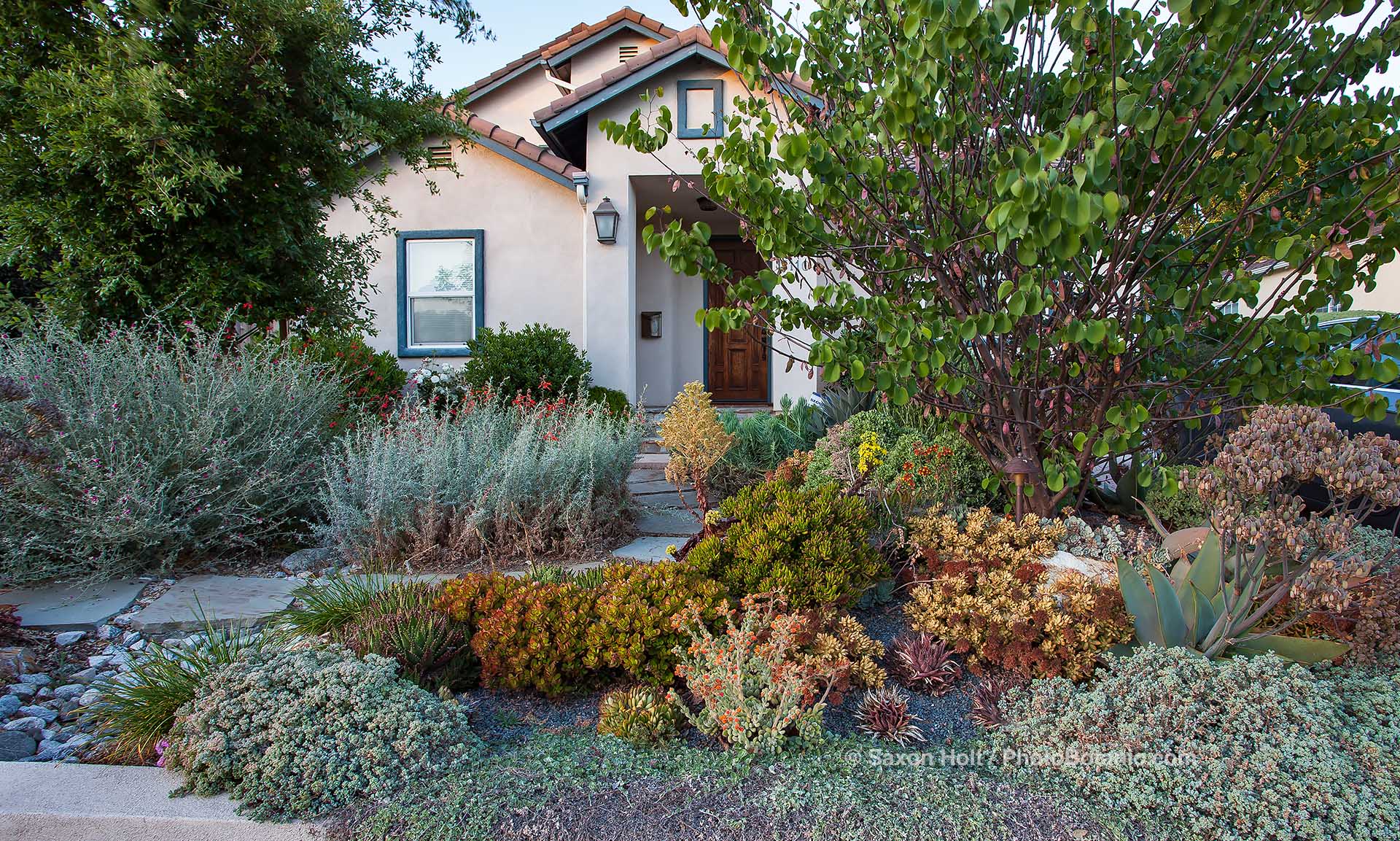
Zone 0, right next to the house, has traditionally been a place for foundation plantings that allow a home to seem to be immersed in it’s garden. Many existing gardens especially with avid gardeners landscaping in small urban lots that use every inch of space will NOT be greatly affected much more than 1 foot from the house. New construction will be required to plant no vegetation within 5 feet which seems sensible in the very high hazard zones.
Let’s repeat: most gardens will not be affected. Gardeners – don’t get caught up in hearsay and headlines. Read the code. The news and headlines on this issue are certainly important and can be a reminder to pay better attention to the very real threat of future fires and our own garden design and maintenance. Gardens can be a positive, resilient, firewise contribution to a healthy green infrastructure, but the heavy hand of enforcement will not likely be a government official. We should all take responsibility for making our homes safe.
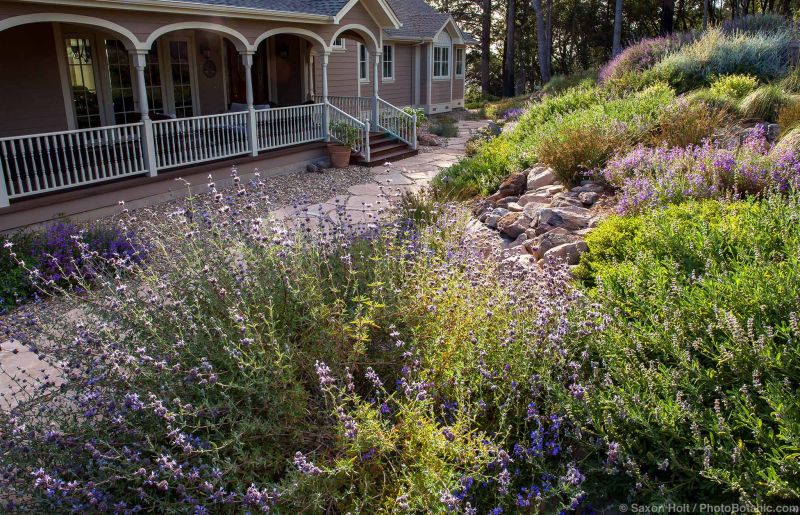
You may have to make some small adjustments with your organic mulch within 1 foot of the house (yes, 1 foot) but really, do you need a code to tell you to remove your deadwood and keep your trees away from your chimneys? The new code has more clearly defined combustible materials must not be under the overhang of the eaves of a house typically 1 to 2 feet. The other three or 4 feet of zone 0 can contain well-maintained plants. Just be aware of the most flammable ones and don’t plant junipers.

Evidence has shown that the fires often spread by flames leaping up to the underside of eaves which are often unprotected and made from wood. Let’s harden the home and keep ember fires from under the eaves. Another very sensible requirement in the new code is no wooden fences and gates within 5 feet of a home. It’s sad to see so many homes are already rebuilding with wooden fences but it’s very clear past fires spread in neighborhoods along fences.
In our opinion good gardening practices can contribute to fire resiliency and make communities more fire safe. Critically we need good maintenance and we need to keep our plants hydrated which keeps them from being flammable. One of our fundamental core beliefs, “We Believe”, ever since we started this Summer-Dry Project has been advocating Water for gardens, and we are assuming our audience are conscientious gardeners.
You are the ones who have been vocal at the Cal Fire meetings, and gardeners have made a difference in these regulations, we should be willing to except them, perhaps adjust our own designs going forward, but recognizing that we are helping keep our communities more fire safe with our best practices. Fires are only becoming more frequent and more destructive, we are not going prevent them and let’s do what we can to make our own houses safer with our own gardens fire safe.
Learn more about fire preparedness and guide to rebuilding after a wildfire at the website of California’s Office of the State Fire Marshal
We have made our own suggestions on how to adapt to these regulations in this post, Making the Most of Zone Zero.
An excellent explanation and history of AB 3074 is explained in San Bernardino Wildfire Defense including resources and checklist of questions that any homeowner might want to consider.
The insurance industry has its own perspective on this and has done a lot of research on wildfires in Zone Zero. Great information here.

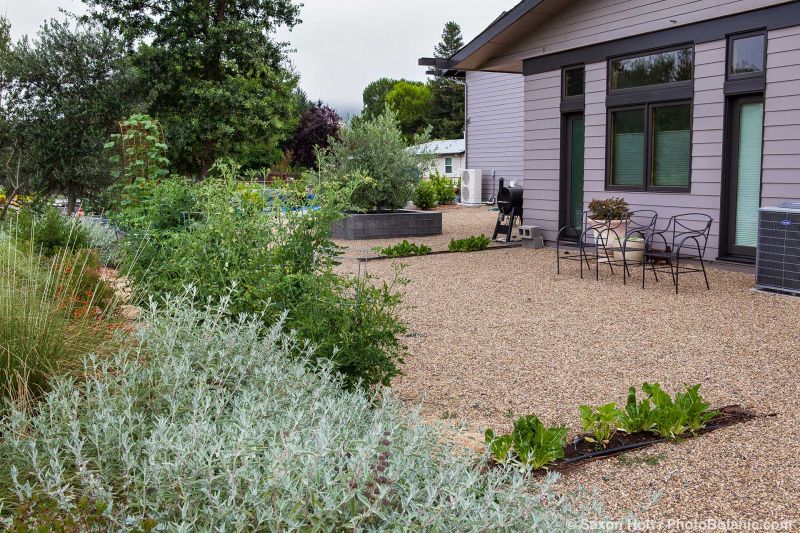
Photo courtesy of Fire Safe Marin, a comprehensive resource to Fire Smart design and its excellent, free flip book “Fire Smart Yards”.

Share This!
Related Articles

By: Saxon Holt

By: Nora Harlow

By: Saxon Holt