February 2026 Newsletter: Spring Marvels
Share This!
Greetings, friends –
This is supposed to be the rainiest time of the year, but as we write this in early February it hasn’t rained in five weeks. Some light showers are expected this week but won’t accumulate more than a couple of inches at best, and we are hopeful for that.
Because we had good rains earlier, most gardens hardly look stressed. Indeed, many are looking fabulous, and we urge you to go out and spend some time looking at the details, get lost in the beauty, marvel at what nature gives you, and take in a bit of stress relief. We’ve included some February garden details below.
But do consider watering your garden now. Unless you have a lot of succulents, it is hard to overwater in February when the roots are growing and gathering nutrients to get plants through what might be a very dry summer. Protect them by providing the hydration they expect in the winter-wet rainy season.
~ Saxon Holt and Nora Harlow
February Blog Post: Banksia

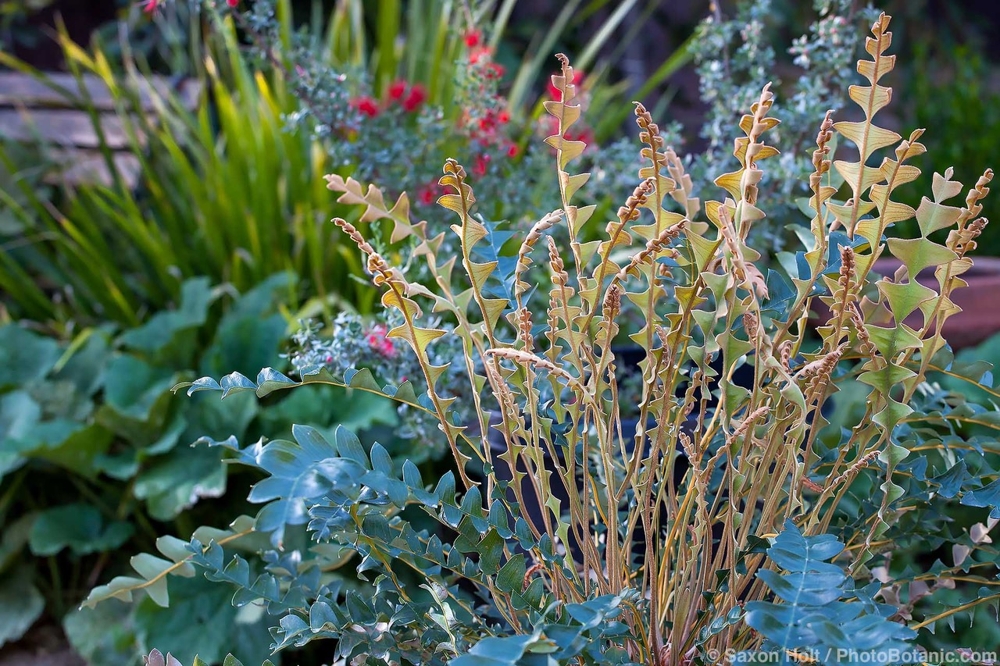
“New leaves of Banksia drummondii (formerly Dryandra drummondii) are covered with rust-colored, woolly hairs”
Did you know that genus Banksia now includes all Dryandra? Read all about it in our current blog: “Despite the merge and their shared traits and provenance, the two groups remain distinctive in ways that may be of interest to gardeners and garden designers.”
Read On
Instagram Memories

January 9, 2023
“Tazetta daffodils (Division 8 Narcissus) seem particularly suited to summer-dry climates, here ‘Martinette’ still repeating after 15 years in my garden.”
Follow Us on Instagram
February Details
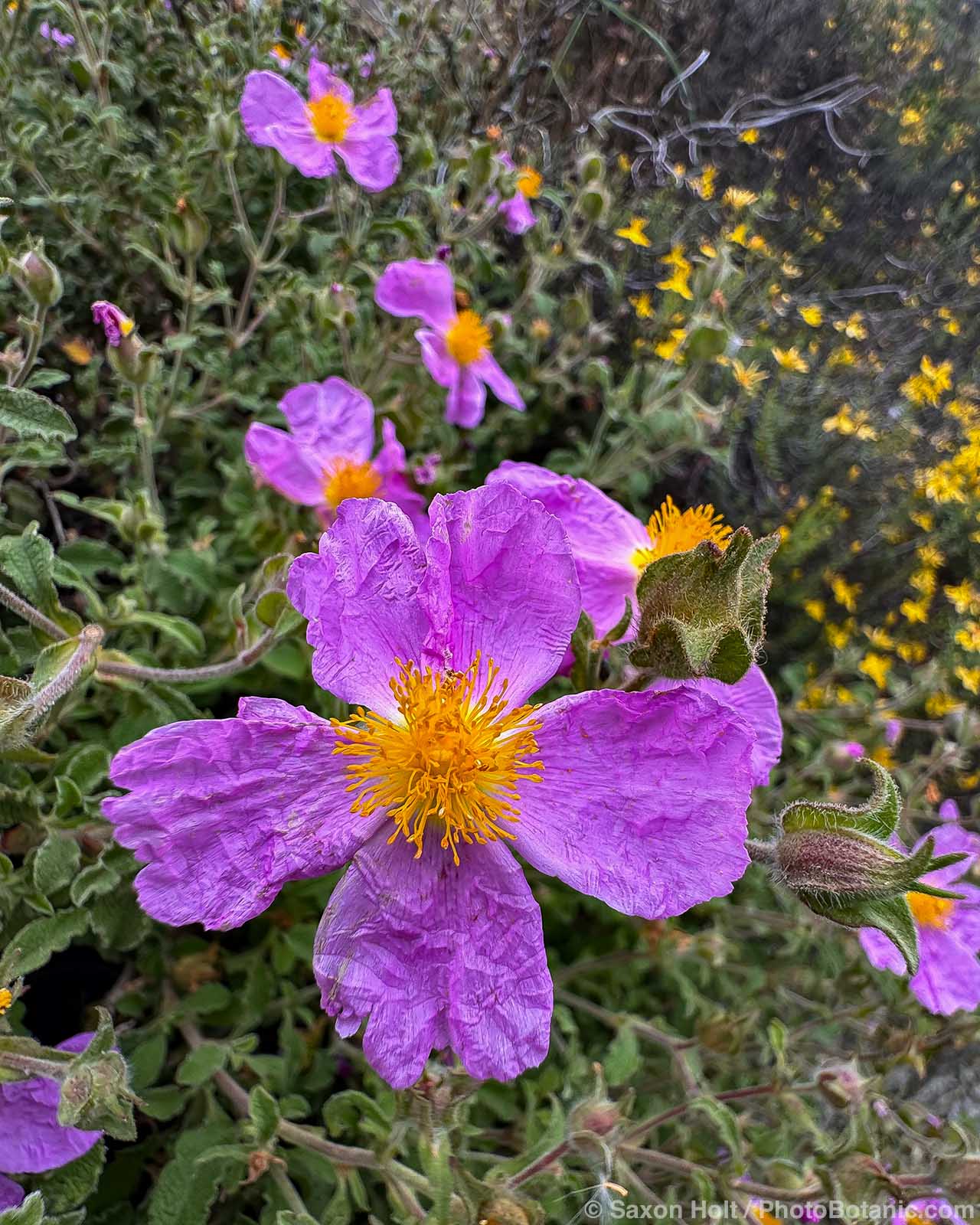
Even though the calendar doesn’t officially say so, we in summer-dry climates, are well into spring and there is much to marvel. Emerging leaves and the unexpectedness of spring flowers are a tonic of renewal. Bulbs can seem particularly magical as they spring out of the earth.
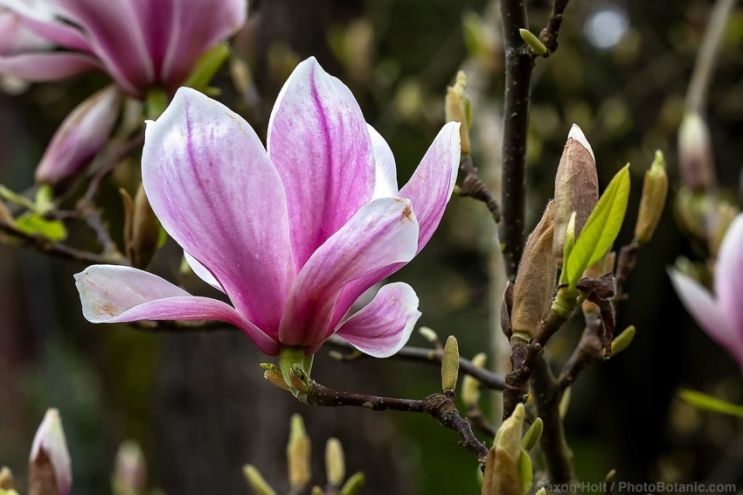
Magnolias do not originate in summer-dry climates but are very well adapted to those sections that get good winter rains, such as the Magnolia x soulangeana below in our Northern California garden. For anyone who is close enough to San Francisco to get to the Botanic Garden in February, it’s been a fantastic year for their extensive Magnolia collection.

Oaks are found in almost every ecosystem in North America, but we don’t often think of them as winter flowering trees. But look at the leaves unfolding on this black oak, Quercus kelloggii.
The long, dangling flower catkins are remarkable, but those delicate new leaves are extraordinary. Why its common name is black oak when the fresh leaves are so red seems odd, but oak experts do put it in the red oak subsection of oaks (section Lobatae as opposed to the white oak section Quercus).

Get More Ideas in our Book
Links We Like
There is a new article on supplemental winter irrigation by Douglas Kent on the Pacific Horticulture website, emphasizing the importance of keeping plants hydrated for fire safety.
We would love to hear about any resources you would like to pass along. We all get these snippets from our news feeds and inboxes. Let’s share the best, and we will keep the running list so you can find them later on the Links We Like page.

Share This!
Related Articles

By: Nora Harlow

By: Saxon Holt

By: Nora Harlow