Woolly Blue Curls

Share This!
Woolly blue curls (Trichostema lanatum) is well known to California’s native plant gardeners, but likely less so to gardeners elsewhere who might have the climate and soils to grow it well. Native to sandy or rocky soils in the coastal mountains of central to southern California and northern Baja California, T. lanatum is a superb evergreen flowering shrub or subshrub for gardens in summer-dry climates.
Woolly blue curls (Trichostema lanatum) in the California Botanic Garden, Claremont, California
Woolly blue curls matures quickly, forming a rounded or domed 3- to 4-foot tall by 4- to 6-foot wide shrub. Leaves are resinous and narrowly linear, almost needlelike. Shiny and bright to dark green on the upper surface, they are woolly gray-white beneath.
Borne on stiff stems that extend upward and outward in all directions, leaves have a fragrance that has been described as minty, fruity, piney, or cedarlike but is unique to the leaves of woolly blue curls. It is one of the distinctive scents of the California coastal sage scrub and chaparral.
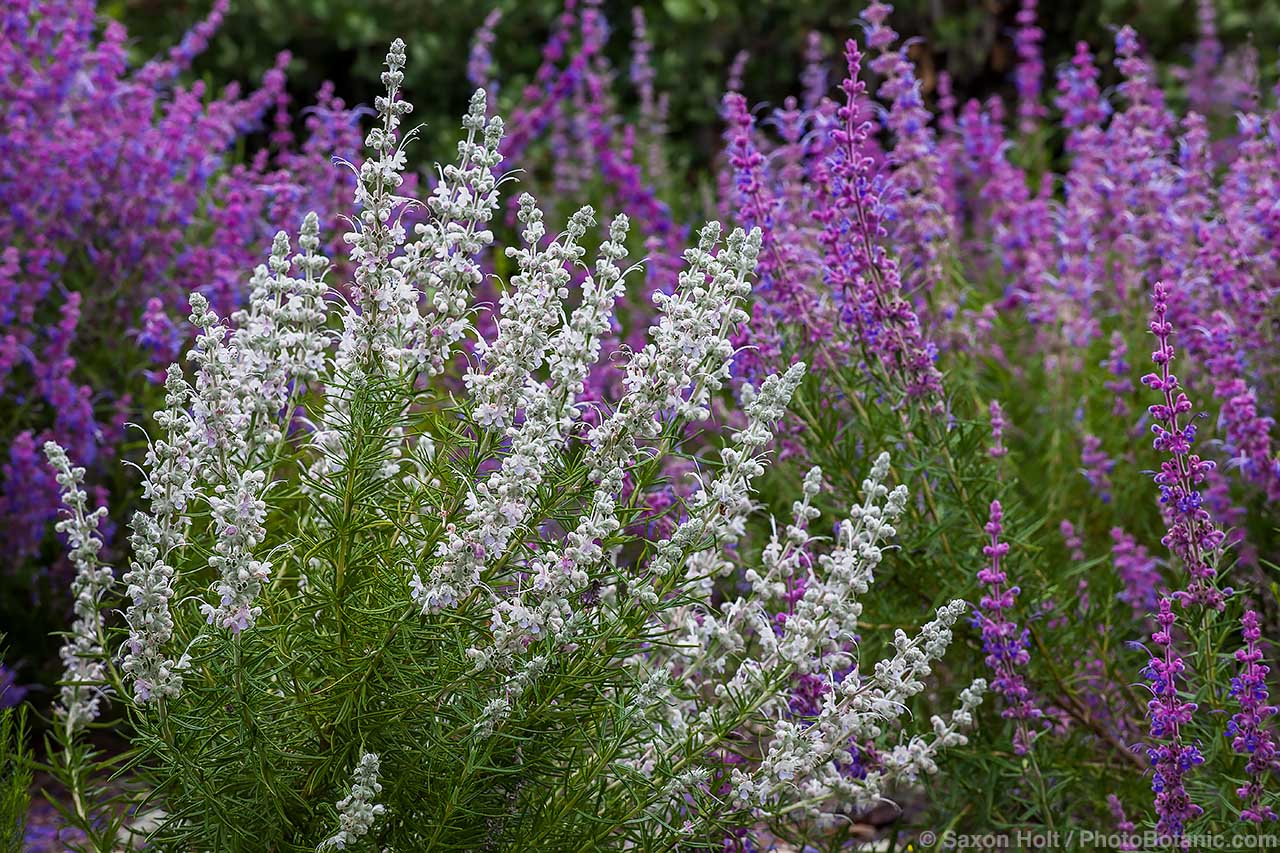
A white-flowered form of woolly blue curls at the California Botanic Garden
The flowers of Trichostema lanatum are its most striking feature and the long flowering season can extend from April to July. Flowers are held in a spike at the end of each leafy stem. As is typical of the mint family (Lamiaceae) to which it belongs, the petals are joined at the base to form a two-lipped tube with a protruding lower lip. Long, curving stamens extend prominently beyond the petals. Flowers are usually some shade of blue or blue-violet but some forms are pinkish or even white.
Flower buds are clustered in the axils of the main leaves and densely covered with fine hairs that can be a rich magenta, bluish lavender, rose pink, or creamy white. These velvety hairs color and soften everything within the inflorescence: the buds, emerging flowers, calyces, and often even the stems. They give the plant both its riveting presentation in bloom and its common name.
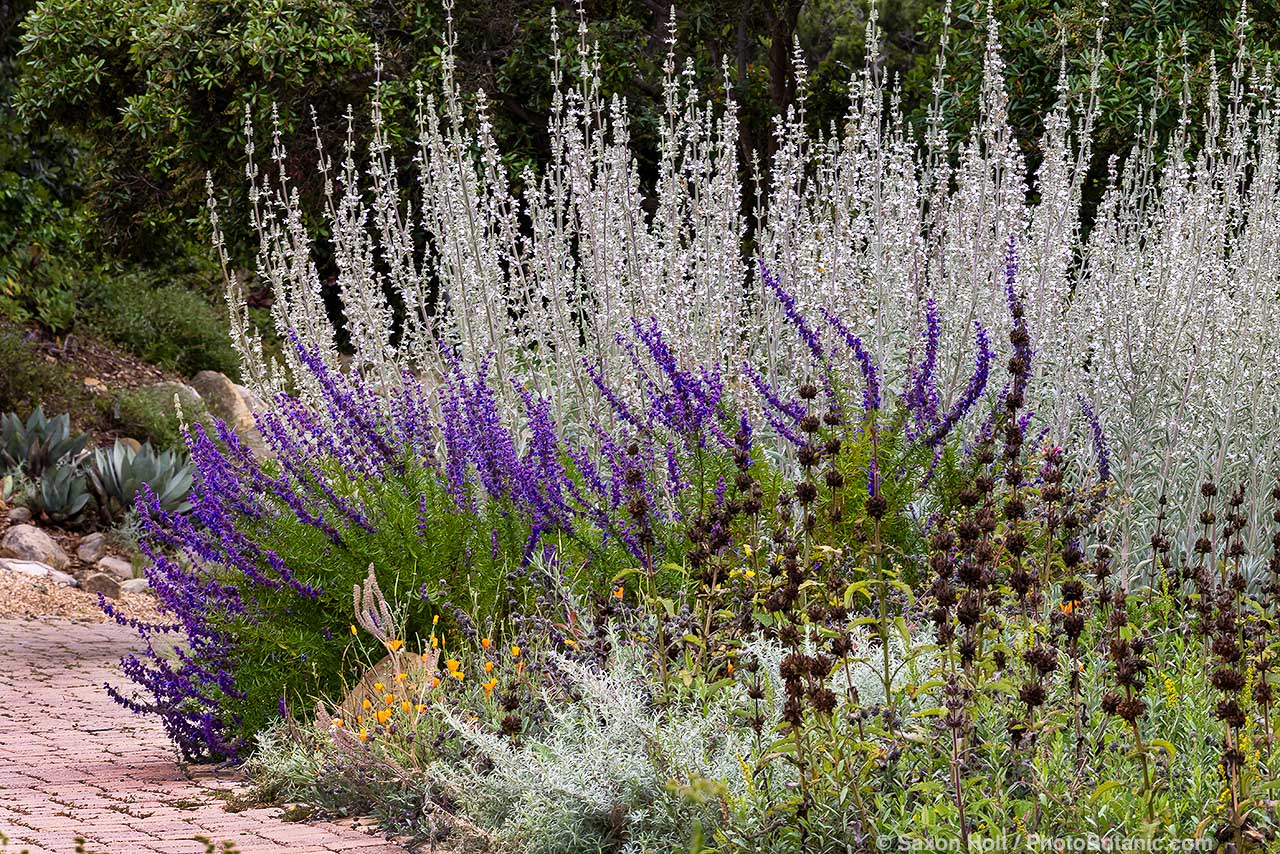
Flowering stems of woolly blue curls stand out against a background of white sage (Salvia apiana) which thrives in similar garden conditions.
In the garden woolly blue curls needs full sun, near-perfect drainage, and little to no summer water once fully established, which can take two years. Site it with plants that thrive in similar conditions, such as some of the native California sages, achilleas, or low-growing ceanothus.
If your soil is clayey, prior to planting soak the area deeply to give the roots an incentive to head down. Tip prune after flowering to encourage plants to fill out. Be prepared to replace some plants after five or six years. Woolly blue curls often declines as it ages and it cannot be revived by hard cutting back.

Share This!
Related Articles

By: web@thegardenofwords.com

By: Nora Harlow

By: Saxon Holt