

Drought Tolerant is Irrelevant
Share This!
All plants are drought tolerant in their native habitat and no plant can live without water.
No matter where a garden is located, the tropics or the desert, the plants in that garden should naturally tolerate periods of lower than average water. They may thrive with supplemental water during dry periods but the term “drought tolerant” can be very misleading, especially in summer-dry climates.
Summer-dry gardens are naturally dry for long periods. It’s not drought, it’s normal. Depending on the particular location, a summer-dry climate can expect to be dry for 5 months (such as Seattle) or 9 months in Southern California.

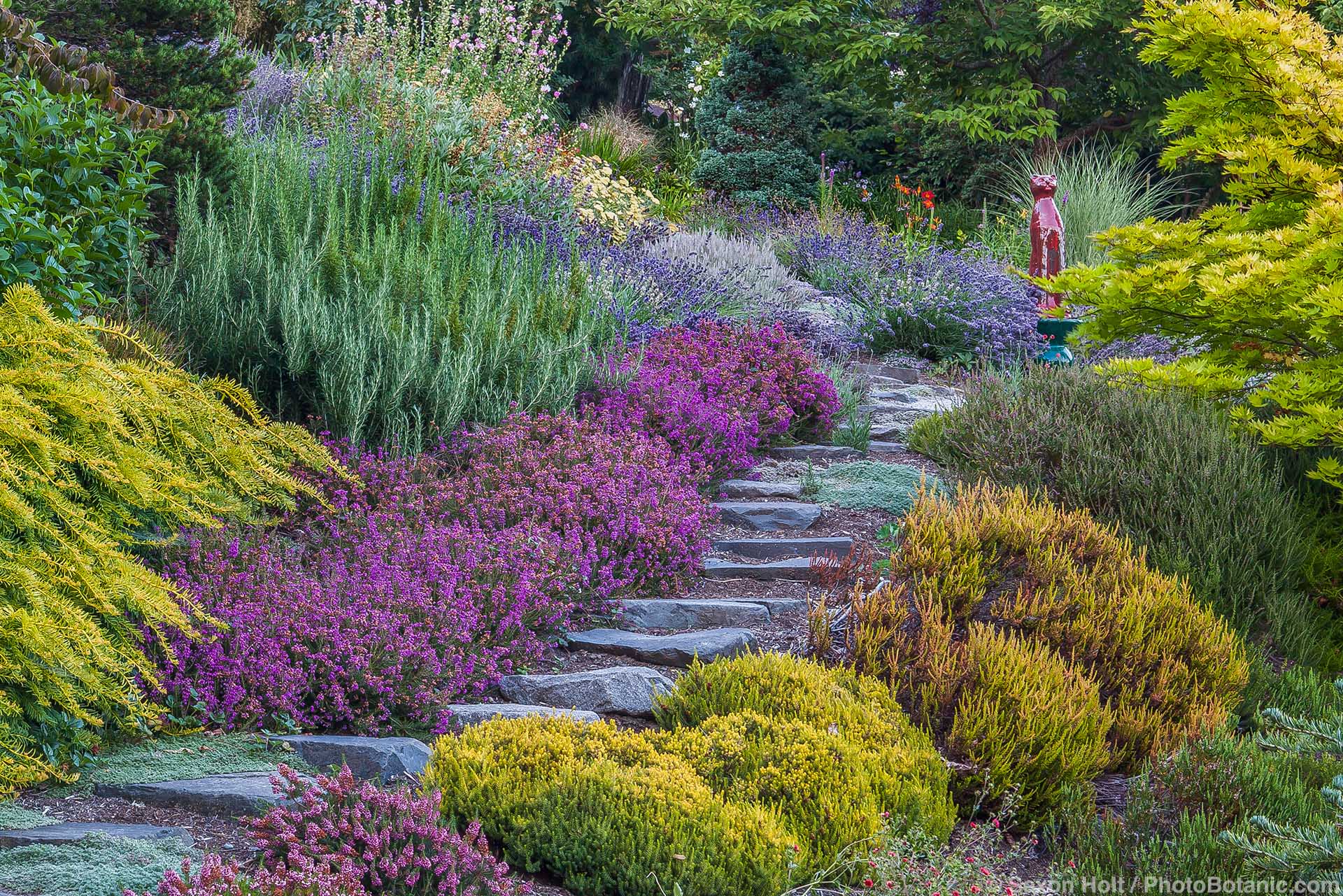
Waterwise mixed border demonstration garden at Bellevue Botanical Garden

Waterwise mixed border at Huntington Botanical Garden
The best plants for those gardens are very different, but each can withstand months without water. Each garden looks better with some summer water and should be tolerant of no water, but this does not make them tolerant of drought outside the region and natural water they receive.
It’s pretty obvious the Bellevue garden, near Seattle would not survive in Southern California but the cactus and succulent garden of the Huntington in Pasadena would not survive in Palm Springs without additional water. Drought tolerant tends to mean that the plant is tolerant of no additional water in a garden in a given climate.
So don’t select plants for your garden that are simply called drought tolerant. A good local nursery will know the best plants for your region and may very well use the term “drought tolerant” when they really mean climate tolerant. Even local nurseries serve gardeners in diverse micro-climates, so know your natural rainfall when asking about drought tolerance.

“Drought tolerant” plants in Digging Dog nursery display, Mendocino, Callifornia
Most gardens look best with some supplemental water and the art of summer-dry gardening is learning how to use water efficiently and experimenting with plants that mix with others. The State of California has an excellent database of garden plants, comparing how the same plants grow in different parts of the State.
The Water Use Classifications of Landscape Species or WUCOLS database is available as searchable database.
The best plants for summer-dry gardens are not drought tolerant, they are tolerant of dry periods in their native climate. Know your garden and garden where you are. Buy our book.

Share This!
19 Comments
Leave A Comment Cancel reply
Related Articles

By: Saxon Holt
-
By: Saxon Holt


I see in your post a term I think should catch on. “Climate tolerant” is a much better term now that climate has been changing in so many parts of the world. In our area, we have had very dry summers which have not been all that common for our area, yet we can get late. cold springs and wet springs that really throw off whether plants flower and fruit. It really has been difficult planning gardens and resorting to only drought tolerant sometimes means death to plants in those cold, wet springs. It so depends on where one lives and how our seasons have been playing out. I do ho CA gets a wetter winter. Your area is long over due.
Thanks for dropping by Donna. I have learned over the many years of photo requests from non gardening photo editors that “drought tolerant” is so imprecise and will not help gardeners have success.
We are all doing rain dances. – Saxon
This is a wonderful website. I thought I would throw our website into the mix. We are Xera Plants Inc. in Portland. We specifically grow climate adapted plants for gardeners in the PNW. We emphasize plants adapted to our warm dry summers and the more efficient use of resources. See http://www.xeraplants.com. Our retail plant shop is located at 1114 SE Clay St. PDX 97214
Thanks for stopping by Paul. At some point as the site grows, I hope to add links to nurseries and will certainly want to include Xera. And I hope I can stop by when next in Portland. – Saxon Holt
Very cool you started this website, Saxon. You are amazing and very drought tolerant
Thanks Lauren. High praise….
the word drought is so misused. Also container plants are whole ‘nother ballgame.
I think most experienced gardeners understand plants water needs and tolerances. It’s the novices and general public hoping there is a magical fix for ignoring their garden.
Charlotte – Many of us experienced gardeners learned the hard way … and I am still susceptible to the claims of “drought tolerance” when I hear about a new plant
EXACTLY. Thank you!
Saxon, your ability to entice and teach through gorgeous images is profound!!! Thank you. Your comments on drought tolerant–I live in the desert, drought is normal here too–are apt, but I think I like climate-adapted rather than climate tolerant though because plants need to be able to adapt to not just tolerate the changes we’re experiencing.
Thanks for dropping by Judith. I agree that “climate adapted” may be a better phrase, the only reason I use climate tolerant is for the less informed to make the connection to drought tolerant, a phrase we hear too often.
This is a year later that I am reading this and, good article!
Here in Lake County it took a while to get the hang of the seasons compared to San Francisco.
Ken
Well Lake County actually HAS seasons – and hopefully this new wet season will help repair some the fire damage up your way.
I just found the website and blog Saxon… and THEY’RE AWESOME! I’ll be referring back regularly.
I’m an irrigation pro and would love to see some resources for irrigating these “climate-tolerant” plantings. Too often I’ve been called upon to “correct” problems that stem from new installations that haven’t been “adjusted” since the day the contractor got paid.
When irrigating “from scratch”, the thoughtful irrigator considers the water needs of new plants “once they’re established” as well as when they’re planted; revisits the site at least once (preferably several times) to adjust for plant growth; and DOCUMENTS when “and” what the irrigation system is supposed to be doing.
I’ll be referring back here regularly and wonder if you’d appreciate any blog entries related to irrigation. I love talking about the topic and sharing my knowledge.
Thanks Johnnie – Your comment clearly shows good knowledge and great common sense adjustments homeowners need to recognize when they start gardening. The site is still developing and we have not had any guest bloggers, but are open to sharing credible info like this. Keep in touch
“Drought tolerant”–I hate that term applied to California–it applies correctly to plants that can go for a few weeks without rain in summer-rain climates like Georgia or Virginia, perhaps. “Climate appropriate” seems more accurate for our state.
I hate the term applied to any responsible gardening. In summer-dry climates long summers with no rain is not drought – its normal.
As a landscape designer that focuses on sustainable and regenerative landscape designs, I appreciate you correcting the term “drought tolerant”. In the San Jose Bay Area, I prefer to use the phrase “low water plants” when compared to high water need plants like lawn. But I also love the term “climate appropriate”. Many plants are drought tolerant, and may still be considered medium water in WUCLOS because they look best with more water than is traditionally provided in the local climate.
Great comment, thanks. On the other hand there are definitely plants in WUCOLS that might be considered medium use that actually do reasonably well with low water. In all this, we advocate for some supplemental water for most gardens. In the urban and suburban spaces we garden plants tend to need a little extra help, and there is great public and wildlife benefits.